sound design concept
The Sound Design Matrix: Visible vs. Invisible
In sound design, every sound falls into one of four categories based on Source (is it seen?) and Energy (is it an action or a background?).
The Quick Reference Table
| VISIBLE (Synchronous)(We see the source) | INVISIBLE (Acousmatic)(We do not see the source) | |
|---|---|---|
| ACTIVE (Specific Events) | 1. Hard Effects (Foley) The “Handshake” with reality. (Footsteps, Gunshots, Lips) | 3. Narrative Triggers The “Question Mark.” (Off-screen scream, Knock on door) |
| PASSIVE (Continuous States) | 2. Material Textures The “Touch.” (Rain on a window, Steam form a pipe) | 4. The Manipulative Base The “Subtext/Vibe.” (Room Tone, Drones, Music) |
1. Visible + Active (Hard Effects)
- What is it? Specific actions happening on screen right now.
- Function: PROOF. It proves to the audience that the visual is physically real.
- Student Trap: Beginners spend 90% of their time here. It is necessary, but it rarely carries the emotion.
- Example (Train Scene): The girl’s shoes hitting the tile; the scarf snapping in the wind.
2. Visible + Passive (Material Textures)
- What is it? Continuous sounds coming from an object we can see, but that isn’t “doing” anything.
- Function: IMMERSION. It gives the object weight and history.
- Example (Clock Scene): The mechanical ticking of the clock hands; the rustle of the silk as it ripples.
3. Invisible + Active (Narrative Triggers)
- What is it? A specific event happening just outside the frame.
- Function: TENSION & CURIOSITY. It forces the audience to look around the edges of the screen. It implies a larger world.
- Example (Train Scene - Horror): The heavy footsteps behind the camera; a scream from the tunnel.
4. Invisible + Passive (The Manipulative Base)
- What is it? The “container” for the scene. Ambiences, drones, room tones, and abstract textures.
- Function: EMOTION. Since the audience isn’t analyzing what this sound is, it goes straight to their nervous system. This is where you control the fear or the joy.
- Example (Clock Scene - Anxiety): The high-pitched rising Shepard Tone (The “Quicksand” effect).
Sound Design Concept: The Station
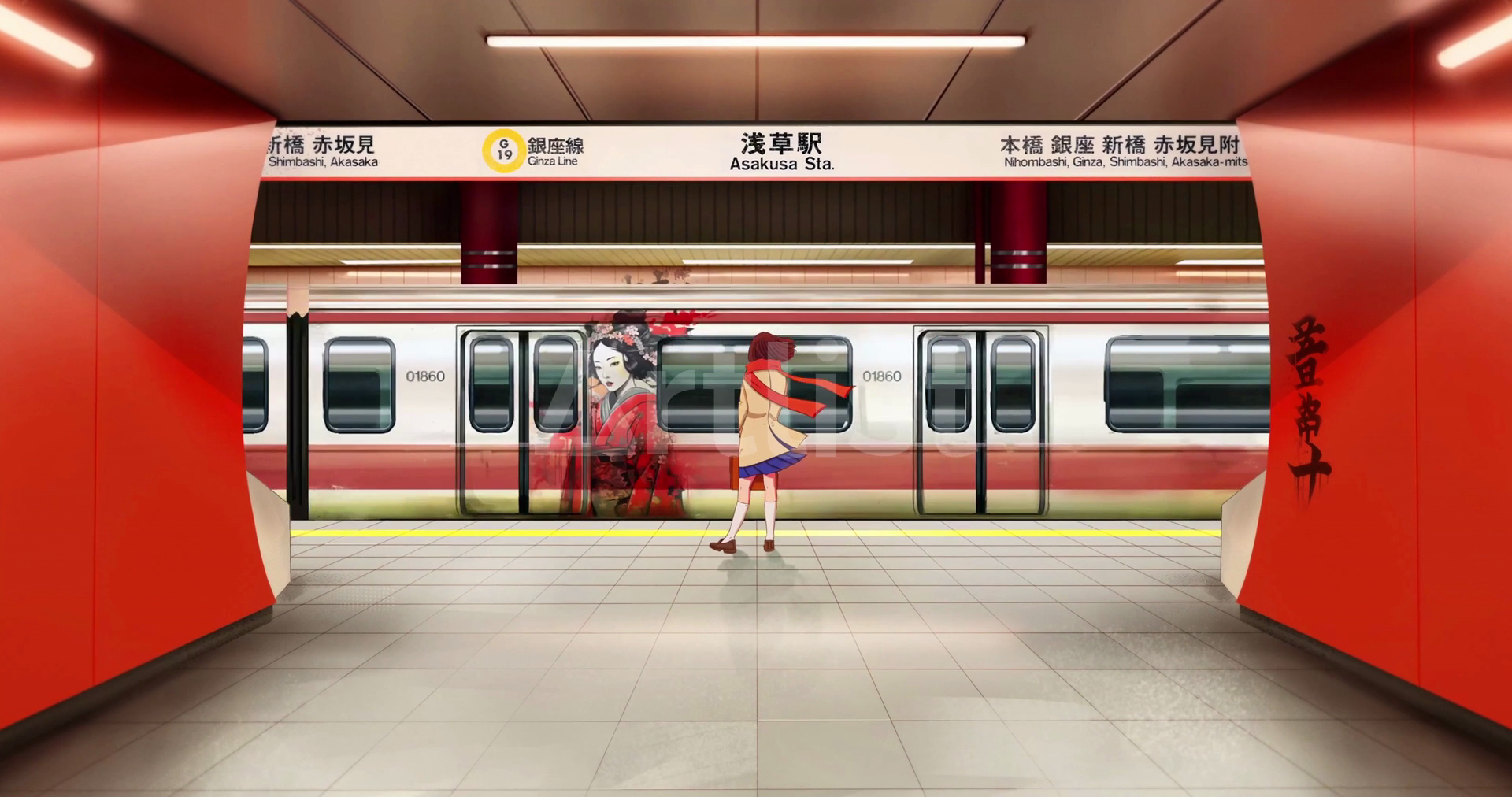
Story 1: The Euphoric Homebound
Narrative Goal: To re-contextualize the subway as a place of weightless transition and safety. The sound should feel “expensive,” airy, and emotionally resonant.
I. The Arrival (The Subliminal Train)
- The “Clean” Whirr: The low-frequency rumble of the train is filtered out. In its place, a high-frequency harmonic hum—similar to a Tibetan singing bowl—accompanies the train’s movement.
- Audio Highlight for Fast Visuals: Because the graffiti (Geisha, flowers) passes too fast to see, we use “Sync-Points”. Every time a major art asset flashes, a subtle celeste or glockenspiel note triggers. This creates a “musicalizing” effect, making the blur of color feel intentional and beautiful.
- The Silk Scarf: The flapping of the scarf is isolated and layered with the sound of shaking a silk sheet. It is treated with a lush, “Plate” reverb to make it feel close and intimate.
II. The Atmosphere (The Station)
- Muffled Joy: A distant, highly reverberated recording of an instrument playing romantically. It should sound like it is coming from another floor or a memory, providing a melodic anchor.
- Acoustic Expansion: Use a wide stereo imager on the ambient station noise to make the “red corridor” feel like a vast, open cathedral rather than a tunnel.
III. The Climax (The Opening Doors)
- The Exhale: As the doors slide open, a soft pressurized air release (pitched up by +5 semitones) acts as a literal sigh of relief.
- Crystal Silence: The moment the doors lock open, all low-end frequencies cut out. The final sound could be a crystalline harp glissando that fades into a warm, silent “bloom.”
Sound Sourcing & Planning
Strategy: Prioritize “Clean” and “Organic” textures. Use synthesis to add a glow that reality can’t provide.
1. Library Sourced (The “Foundation”)
- Station Room Tone: Look for “High-End Commuter Rail Station” or “Modern Terminal Ambience.” Avoid “Old Subway” or “Gritty Underground” libraries. You want a hum with minimal clatter.
- Train Air-Brakes: Search for “Pneumatic Hisses” or “Truck Air Brakes.” You want the sound of air, not the sound of grinding metal.
- Instrumental Textures: High-quality “Warped Piano” or “Ambient Rhodes” loops. These act as the emotional bedding.
2. Recorded/Foley (The “Intimacy”)
- The Scarf: Record a silk or light polyester fabric being shaken near a condenser microphone. The visual is close, so the sound should feel like it’s in the listener’s ear.
- Soft Footsteps: Record yourself in soft-soled shoes on a tile floor. Add significant reverb in post to make the station feel huge but empty.
- The “Busker” Layer: Record a faint acoustic instrument (guitar or flute) in a hallway to capture natural, distant reflections.
3. Synthesized (The “Glow”)
- Harmonic Bed: Use Wavetable Synthesis to create a lush, evolving pad. This replaces the mechanical rumble of the train with a musical “whoosh.”
- Subliminal Sync-Points: Use a Sinewave with a long decay (similar to a bell) to mark the passing of the fast-moving train art. This “notifies” the brain of the color shifts even if the eye misses them.
Story 2: The Red Paradox
Narrative Goal: To create a sense of psychological paralysis and predatory dread. The sound should feel physically uncomfortable and “wrong.”
I. The Arrival (The Aggressive Train)
- The Screech & Scream: The high-pitched friction of the wheels is boosted at the 4kHz range. This is layered with a distorted violin “Stinger” that rises in pitch as the train approaches.
- The Heartbeat Thud: Instead of a steady rhythm, the train’s “clack-clack” is replaced by a heavy, irregular sub-bass thump. It mimics the erratic heartbeat of someone in a “fight-or-flight” response.
- Subliminal Horror: As the “Geisha” mural flashes by at high speed, we insert a reversed human scream or a “shattering” sound effect that lasts only a few milliseconds. The viewer won’t “hear” it, but they will “feel” the violence of the imagery.
II. The Atmosphere (The Station)
- The Descending Shepard Tone: A constant, infinitely falling pitch-illusion. This creates a physical sensation of vertigo and “sinking,” reinforcing the girl’s frozen posture.
- The “Breathing” Walls: The red walls are given a texture using low-frequency Brown Noise and the sound of dry leaves skittering on concrete. It should sound like the station itself is inhaling and closing in.
III. The Climax (The Opening Doors)
- The Vacuum: When the doors begin to move, all environmental sound is suddenly “sucked” into a momentary vacuum of total silence. This creates a shock to the listener’s ear.
- Mechanical Growl: As the doors fully open, the sound is a heavy, metallic “clunk” layered with a time-stretched animalistic growl. The pitch-black interior of the train is revealed not as a vehicle, but as a throat.
Sound Sourcing & Planning
Strategy: Focus on “Physical Anxiety.” Use synthesis for the math of fear and recordings for the “uncanny” feeling of being watched.
1. Library Sourced (The “Violence”)
- Metallic Screeches: Look for “Industrial Metal Grinds,” “Train Squeals,” or “Knife Sharpening.” These provide the aggressive high-frequencies.
- Deep Drones: Search for “Dark Ambient Drones” or “Cinematic Sub-Booms.” You need sounds that occupy the 30Hz-60Hz range to create physical discomfort.
- Mechanical Clunks: Heavy door locks or “Safe Vault” sounds for when the train doors open. It should sound like a trap snapping shut.
2. Recorded/Foley (The “Uncanny”)
- Stressed Breathing: Record heavy, rhythmic breathing through a tube or mask. It shouldn’t sound like the girl’s breath; it should sound like it belongs to the station walls.
- The “Scuttling”: Use a contact microphone on a metal surface while scratching it with a fingernail. This “micro-detail” makes the red walls feel alive and predatory.
- Scarf Snap: Instead of a soft flutter, record a whip-like “snap” of fabric. It suggests a violent wind or a “pulling” force.
3. Synthesized (The “Psychological Trap”)
- The Shepard Tone: This must be synthesized. Use Multiple Sine Oscillators spaced by octaves. Automate the pitch to fall infinitely while cross-fading the volume of the top and bottom octaves.
- Distorted Bass: Use FM (Frequency Modulation) Synthesis to create “growling” bass tones. FM is excellent for producing the metallic, “angry” textures needed for the train’s arrival.
- The Vacuum: Use a White Noise Generator with a fast volume fade-out (an inverted “Whoosh”) to create the sensation of air being sucked out of the room when the doors open.
Sound Design Concept: The Clock in the Void
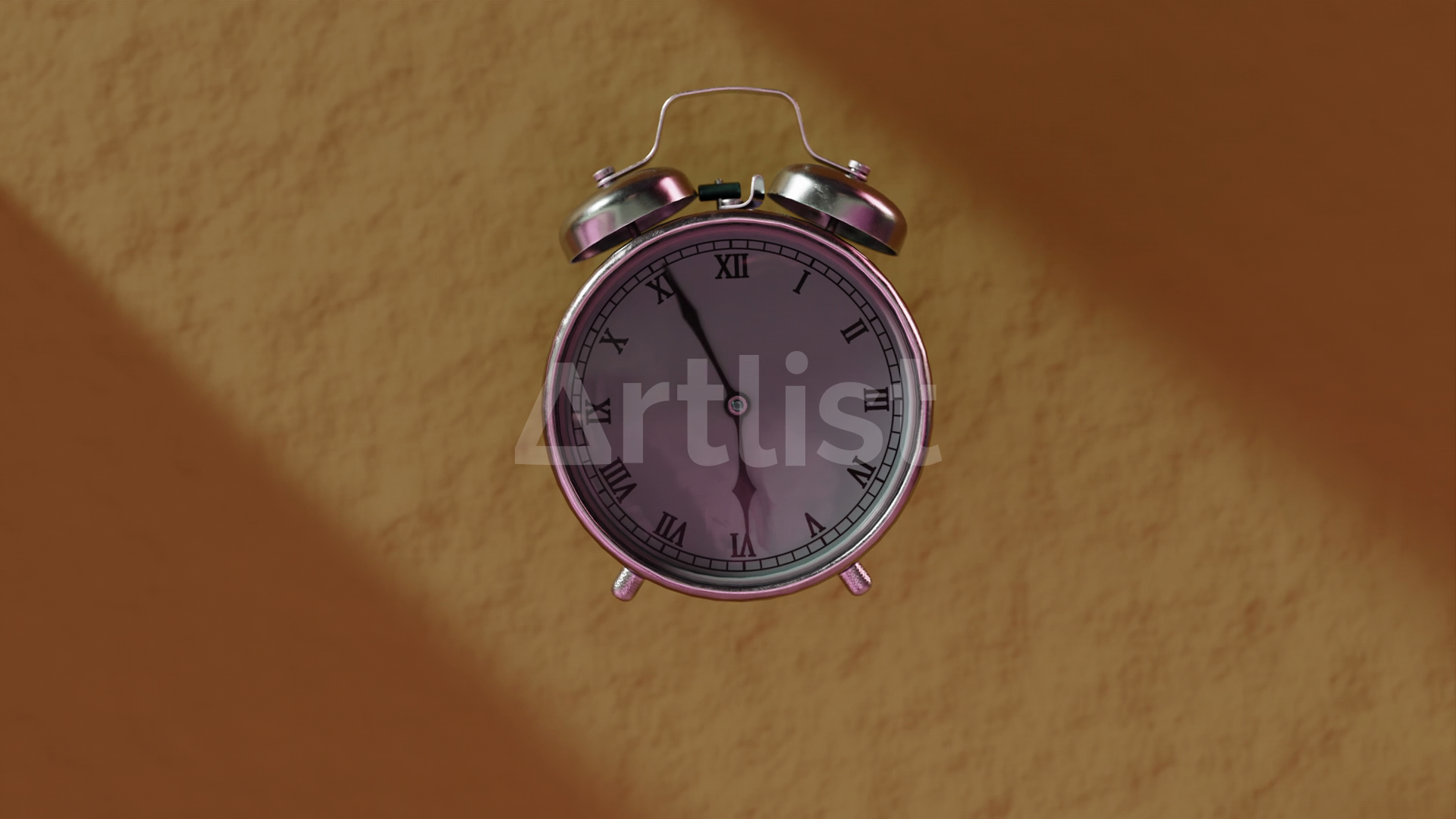
The following analysis explores the “Why” behind the sound design choices. Since the visual sequence is a “locked cut,” the audio serves as the primary storyteller, defining the relationship between the object (the Clock) and the environment (the Fabric).
1. The “Ethereal Drift” (A Story of Surrender)
The Narrative Concept: This story treats the passage of time as a soft, inevitable dissolution into the subconscious. The alarm clock represents the “Waking World”—schedules, deadlines, and anxiety. The fabric represents the “Subconscious” or a “Weighted Blanket.” The goal is to induce a state of relaxation and acceptance.
Why these sounds?
- The “Lullaby” Tick (Wood/Piano Hammers): * Reason: Standard clock ticks are sharp and designed to keep you alert. By sourcing soft, organic thuds, we trigger “Entrainment”—the process where a listener’s heart rate slows down to match a steady, gentle rhythm. It transforms a “warning” into a “heartbeat.”
- The Silk/Velvet “Bloom” (Low Friction): * Reason: In sound libraries, we look for “Low Friction” movements. If the fabric sounds smooth, it implies that the clock is being “tucked in” rather than “buried.” Friction suggests struggle; smoothness suggests grace.
- The Sub-Bass “Hug” (Security): * Reason: High frequencies represent danger and alertness. Low frequencies (30Hz–60Hz) provide a physical sensation of being grounded. As the clock disappears, the sub-bass tells the audience that the object hasn’t fallen into a void, but has landed on something solid and safe.
Sound sourcing: The Ethereal Drift
I. The Rhythmic Core (Library/Synthesis)
- The “Lullaby” Tick: Instead of a sharp plastic click, use a damped wood-block sound or a muted piano hammer strike. It should feel rhythmic and meditative.
- Low-Pass Filtering: As the fabric rises around the clock, apply a gradual Low-Pass Filter (LPF) to the ticking. This simulates the acoustic muffling of a physical object being buried under pillows.
II. The Fabric Movement (Foley/Recorded)
- The “Silk Bloom”: Record the sound of a heavy velvet curtain being slowly dragged across a wooden floor. It should have a “weighted” feel—smooth, consistent, and low-frequency.
- Atmospheric Breath: Layer in a very soft, rhythmic pink noise that mimics the sound of a human breathing deeply. It should sync with the undulation of the fabric.
III. The Final Submergence (Synthesis)
- The Sub-Bass Hug: When the clock is fully consumed at the end, introduce a warm sub-bass sine wave (around 40Hz) with a slow attack. It should feel like a “sonic embrace.”
- Crystalline Reverb: The final few ticks should trail off into a massive, shimmering reverb tail (20+ seconds), suggesting the transition from reality into a dream state.
2. The “Quicksand of Anxiety” (A Story of Suffocation)
The Narrative Concept: In this version, the clock represents the “Self” or “Sanity,” and the fabric is an overwhelming, predatory force (like a looming deadline or sensory overload). The goal is to trigger the “Fight or Flight” response, making the viewer feel increasingly claustrophobic.
Why these sounds?
- The “Nail-Bite” Tick (Glass/Metal): * Reason: We source “Transient-Rich” sounds with sharp attacks. These act as “Irritants” to the ear. Every tick feels like a tiny needle prick, making the passage of time feel physically painful.
- The “Dry Grind” (High Friction): * Reason: We look for recordings of sandpaper, dry parchment, or stiff canvas. These “Dry” textures suggest a lack of air and lubrication. The “Why” here is to make the environment feel abrasive—like the fabric is grinding the clock away rather than covering it.
- The Rising Shepard Tone (The Paradox): * Reason: Usually, when an object is covered, the sound should muffle and fade. By using a synthesized rising Shepard Tone, we create an “Auditory Paradox.” While the object is visually disappearing, the sonic pressure is increasing. This creates an unbearable sense of mounting tension that never resolves.
- The “Vacuum” Snap (Sudden Silence):
- Reason: By cutting to “Digital Black” (absolute silence) the moment the fabric closes, we simulate the feeling of being “trapped in a box.” The lack of a reverb tail robs the viewer of “air,” creating a sharp, final feeling of suffocation.
Sound sourcing: The Quicksand of Anxiety
I. The Rhythmic Core (Library/Synthesis)
- The “Nail-Bite” Tick: Use a sharp, metallic “clink”—like a needle hitting glass. This creates a high-frequency irritation that the ear cannot ignore.
- Heartbeat Layer: Layer a deep, thudding heartbeat that slightly increases in tempo as the clock sinks. This induces physical stress in the viewer.
II. The Fabric Movement (Foley/Recorded)
- The “Dry Grind”: Record the sound of sandpaper on wood or the rustling of very dry, stiff parchment paper. Avoid “soft” sounds; you want “friction.”
- Stretching Tension: Record a rubber band or a piece of leather being pulled until it’s about to snap. Use these “creaks” to emphasize the tension in the fabric as it cinches around the clock.
III. The Final Submergence (Synthesis)
- The High-Frequency Sting: As the clock is finally covered, use a sinister Shepard Tone that rises in pitch. This creates the illusion of mounting pressure even as the object disappears.
- The “Vacuum” Snap: At the very final frame, the sound should suddenly cut to a dead, “dry” silence (An-echoic), leaving the viewer feeling breathless and trapped.
Strategic Comparison Summary
| Design Element | Ethereal Drift (Surrender) | Quicksand of Anxiety (Suffocation) |
|---|---|---|
| Sonic Goal | Internalization (Inside the head) | Externalization (Pressing on the ears) |
| Material Choice | Low Friction (Silk/Velvet) | High Friction (Sandpaper/Parchment) |
| Frequency Focus | Low-Mids (Warmth/Safety) | High-Mids (Irritation/Alarm) |
| Spatial Feeling | Huge Hall Reverb (Infinite Space) | Dry/Mono (Claustrophobic/Tight) |