Compression, part 1
Why making parts quieter enabling you to everthing louder
Why compression?
Consider your everyday phone call as a practical example. During a conversation, one person might speak softly while another occasionally raises their voice. Without audio compression, these varying levels could make it hard to catch every word—quiet parts might be lost, and loud bursts could be overwhelming. With compression, the phone automatically adjusts the sound levels: it tones down the louder parts and subtly boosts the quieter ones. This creates a balanced audio experience, ensuring that every detail of the conversation is clear, much like adjusting the brightness on a photo so that both the dark shadows and bright highlights reveal their details.
I am going to demonstrate the sonic difference with and without compression using this Project: BlackOutBetty
What is compression explained
Audio compression is a key tool in audio production used to balance the dynamics of a sound. By reducing the difference between the loudest and quietest parts of a signal, compression helps ensure clarity and consistency in recordings. Let’s explore how this works by breaking down some essential terms:
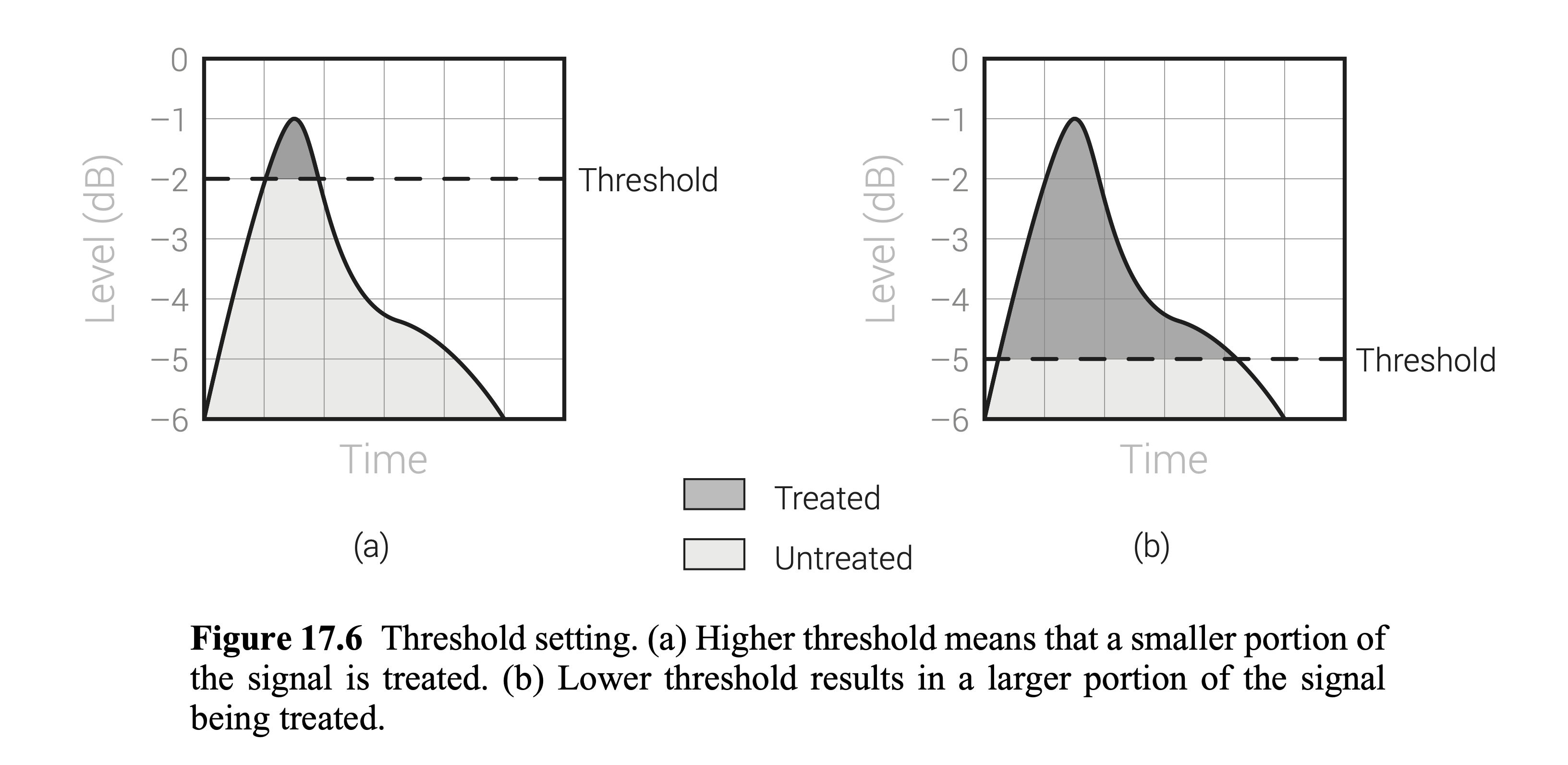
Threshold
The threshold is the set level at which the compressor begins to work. When the input signal exceeds this level, the compressor activates to reduce the volume of those peaks. Essentially, it tells the compressor, “Start working when the sound gets too loud.”
Ratio
The ratio determines the degree of compression applied once the signal surpasses the threshold. For example, a 4:1 ratio means that for every 4 decibels (dB) the input signal exceeds the threshold, only 1 dB is allowed in the output. This parameter controls how aggressively the peaks are tamed.
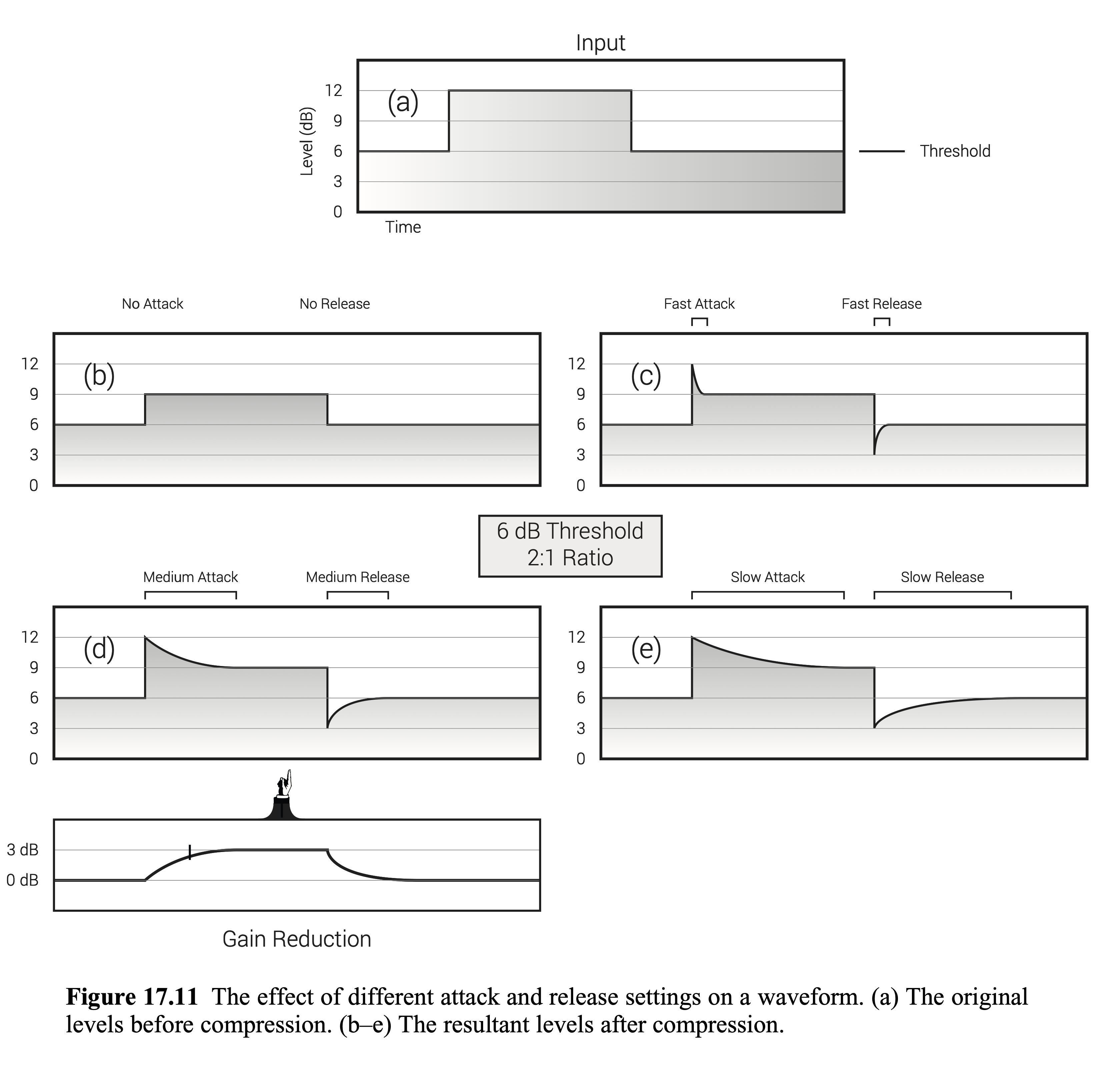
Attack
The attack time refers to how quickly the compressor responds after the signal exceeds the threshold. A fast attack captures sudden transients—like a drum hit—immediately, while a slower attack allows those transients to pass through before the compression kicks in, preserving some of the natural impact.
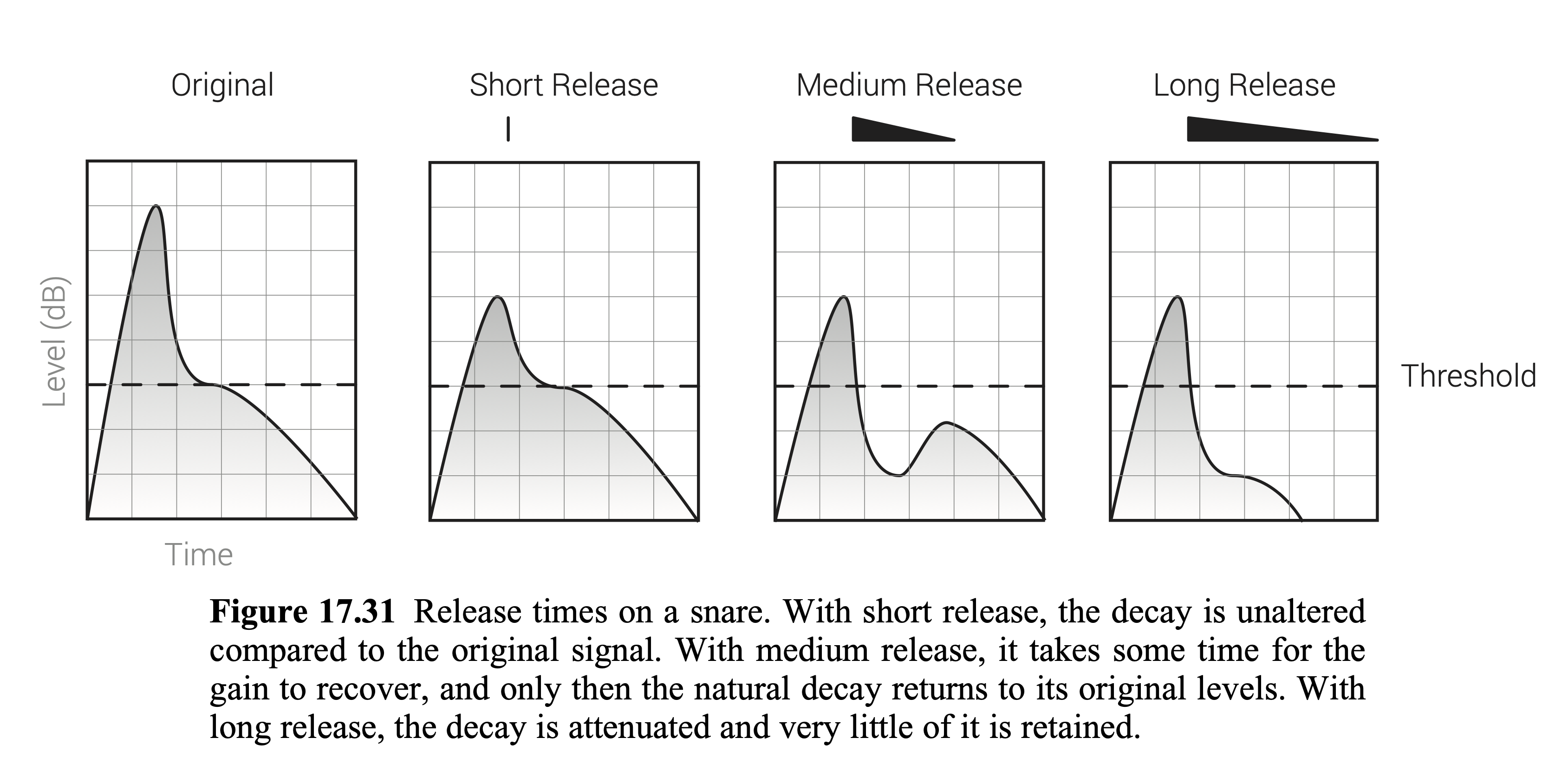
Release
The release time is the duration the compressor takes to stop reducing the gain once the signal falls back below the threshold. A rapid release will quickly restore the signal, potentially leading to a “pumping” effect if set too fast. A slower release creates a smoother transition, maintaining a natural sound.
Make-Up Gain
Because compression reduces the overall signal level, make-up gain is applied to bring the output back up to a desired level. This boost ensures that the quieter parts of the audio remain clear and that the overall mix retains its presence.
Gain Reduction
Gain reduction is a measure of how much the compressor has lowered the signal’s level. It represents the difference between the input level (before compression) and the output level (after compression) when the signal exceeds the threshold. This value gives you an insight into how hard the compressor is working.
In summary, audio compression works by detecting when an audio signal exceeds a predetermined threshold and then reducing its level by a factor set by the ratio. The attack and release times determine how swiftly these changes occur, while make-up gain compensates for the overall reduction, ensuring that the final output remains balanced. Gain reduction is the key indicator of the compressor’s effect on the signal, helping engineers and producers fine-tune the sound to perfection.
Video:
some picture which visualise how compression works:
Threshold:
 Attack & Release
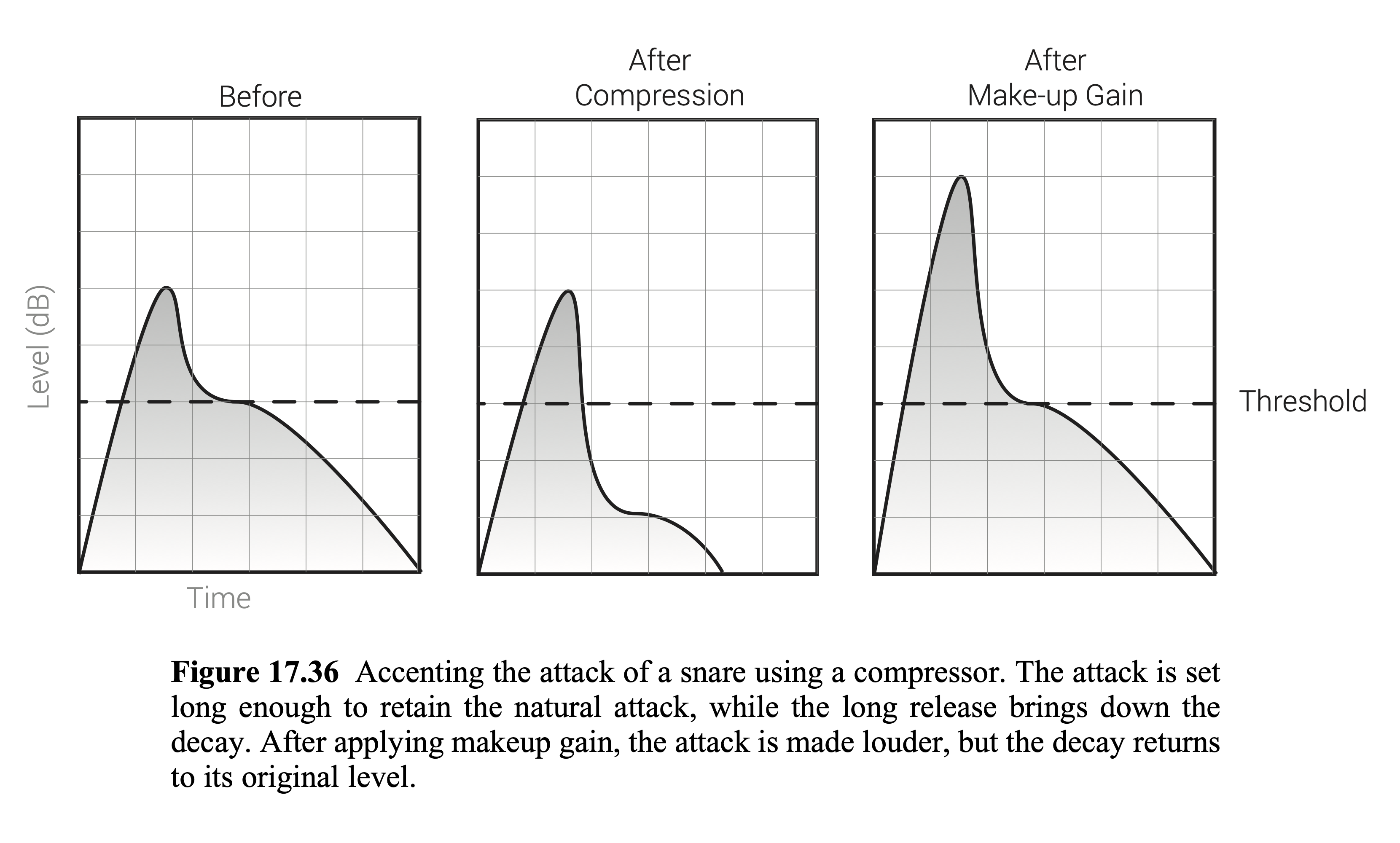
 Attack & Release on a snare
 before and after - compressed snare
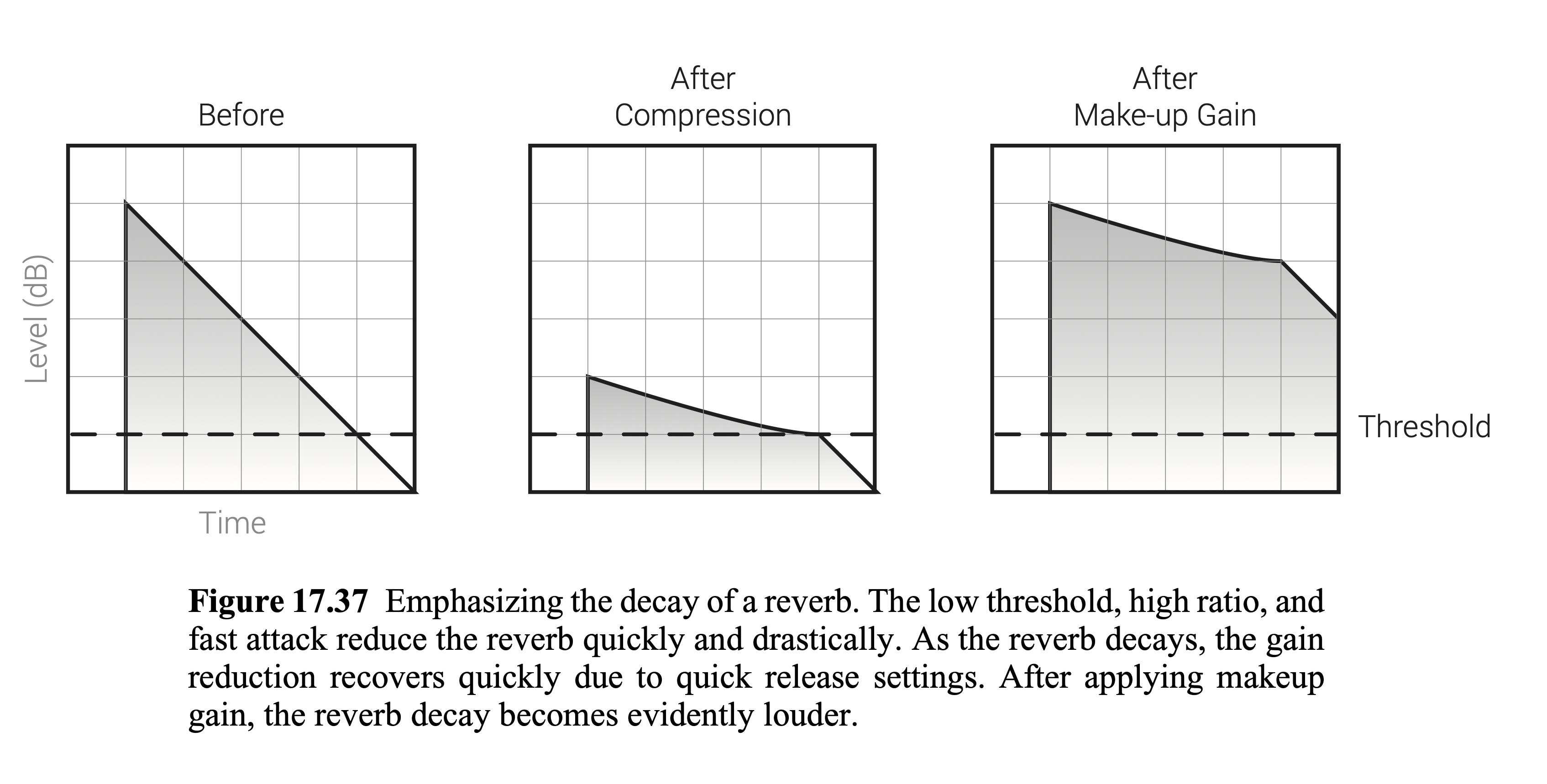
 before and after - compressed reverb